
Gutter guards are sold with a simple promise: install them once and never climb a ladder to clean gutters again. The reality is more nuanced. Guards can dramatically reduce how often gutters need attention, but no product is completely maintenance free, and some types can actually make overflow worse in heavy rain or under certain trees. The right choice depends on what falls on the roof, how steep it is and how much rain arrives at once.
Overflowing gutters are not just an annoyance. Water spilling over the edge can erode landscaping, stain siding, rot fascia boards and pool against the foundation, where it can lead to basement leaks. Understanding what actually causes overflow, and which guards address those causes, helps avoid spending thousands of dollars on a system that does not solve the problem.
Why Gutters Overflow in the First Place

The most obvious cause is clogging from leaves, pine needles, seed pods and shingle granules. Once debris builds up in the trough or blocks the downspout opening, water has nowhere to go. A single clogged downspout can cause an entire run of gutter to overflow during a storm, even if the rest of the gutter is clean.
Overflow is not always about debris. Gutters that are too small for the roof area, gutters pitched incorrectly so water sits instead of draining, too few downspouts, or roof valleys that concentrate a large volume of water in one spot can all cause overflow. Standard 5 inch K-style gutters can handle a lot of water, but large or steep roofs in heavy rainfall regions often need 6 inch gutters and 3 by 4 inch downspouts.
Cleaning Gutters the Right Way
Without guards, most homes need gutter cleaning at least twice a year, usually in late spring and late fall, and more often under heavy tree cover. Cleaning involves removing debris by hand or with a scoop, flushing the gutters with a hose and checking that downspouts flow freely. A plumber snake or a strong spray of water from the bottom usually clears a clogged downspout.
Ladder safety is critical. Use a sturdy extension ladder with a standoff to keep it off the gutter, set the base on firm, level ground and maintain three points of contact. Professional cleaning typically costs 100 to 300 dollars per visit for a single story home and more for two or three stories. For many homeowners, the cost and risk of climbing are the main reasons to consider gutter guards.
Screen and Mesh Guards

Screen guards are the simplest and cheapest option, often costing 1 to 4 dollars per linear foot for DIY products. They are plastic or metal grids that sit on top of the gutter and block larger leaves. They are easy to install and work reasonably well under deciduous trees with large leaves, but small debris like pine needles and seeds can get stuck in the openings.
Micro-mesh guards use a fine stainless steel mesh over a support frame and block much smaller debris, including pine needles and shingle grit. Professionally installed systems often cost 15 to 40 dollars per linear foot. High-quality micro-mesh guards are among the most effective, but in areas with heavy pollen or sap, the mesh can develop a film that needs occasional brushing.
Reverse Curve and Surface Tension Guards
Reverse curve, also called surface tension or helmet guards, cover the gutter with a solid hood that curves downward. Water follows the curve into a slot while leaves slide off the edge. These systems can work well under trees that drop large leaves, and they are often marketed as the most maintenance-free option.
The tradeoffs include higher cost, often 20 to 40 dollars per foot installed, and reduced performance in very heavy rain, when water can shoot past the curve. Small debris and seeds can still enter the slot and accumulate inside, where it is harder to clean. They are also more visible from the ground than mesh systems, which some homeowners dislike. Installation also matters, since the hood has to slide under the first course of shingles or attach to the fascia at the right angle, and a poor fit can let water bypass the gutter entirely.
Foam and Brush Inserts
Foam inserts sit inside the gutter and let water pass through while blocking debris on top. Brush guards look like giant pipe cleaners placed in the trough. Both are inexpensive, typically 2 to 5 dollars per foot, and easy to install without tools.
These products tend to work best on homes with light debris. Foam can trap small particles and develop mold or plant growth over time, while brush guards can catch leaves and needles that then need to be pulled out. Many homeowners find they still need to remove and clean these inserts once or twice a year, which reduces their appeal compared with better systems.
What Gutter Guards Do Not Fix
Gutter guards cannot fix gutters that are undersized, improperly pitched or poorly attached. Before installing guards, check that gutters slope toward downspouts at about one quarter inch for every 10 feet, that hangers are secure and that downspouts discharge at least 4 to 6 feet from the foundation. Correcting these issues is often more important than adding guards.
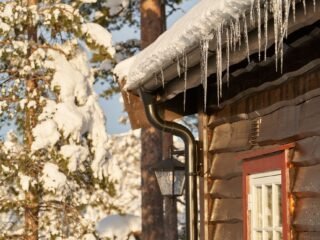
Ice dams are another limitation. In cold climates, gutter guards can sometimes make ice buildup worse by holding snow and ice on the roof edge. Proper attic insulation and ventilation are the real solution to ice dams. Some guard systems offer heated options, but those add cost and electricity use.
Maintenance Still Matters
Even with the best gutter guards, some maintenance is needed. Debris can collect on top of guards, especially mesh types, and needs to be brushed or blown off occasionally. Downspouts can still clog from fine particles that pass through the guard. A quick look from the ground during a heavy rain will reveal any spots where water is spilling over.
A realistic expectation is that guards reduce cleaning from twice a year to once every year or two, depending on tree cover. Annual inspection is still a good idea, and many installers offer maintenance plans. Be cautious of companies that promise guards will never need any attention, since this is rarely true in practice.
Is It Worth the Investment?
For a typical home with 150 to 200 feet of gutter, professional installation of high-quality guards often costs 2,000 to 6,000 dollars, while DIY options can be a few hundred dollars. Whether it pays off depends on tree cover, the cost of professional cleaning, the height of the house and how comfortable the homeowner is on a ladder.
Homes surrounded by tall trees, multi-story houses and owners who cannot safely climb ladders often benefit most. Homes with few trees may find that occasional cleaning is cheaper and just as effective. Comparing quotes, checking warranties and asking about performance in heavy rain help ensure gutter guards solve the problem rather than adding a new one.
Frequently Asked Questions
Do gutter guards really prevent overflow?
Good guards reduce clogging, which is the most common cause of overflow. They do not fix undersized gutters, poor pitch or blocked downspouts, and some designs can overflow in very heavy rain.
What type of gutter guard works best for pine needles?
Fine stainless steel micro-mesh guards generally perform best for pine needles and small debris. Screens with larger openings and reverse curve guards are less effective.
How much do gutter guards cost?
DIY guards range from about 1 to 5 dollars per foot. Professionally installed micro-mesh or reverse curve systems often cost 15 to 40 dollars per foot.
Do gutters with guards still need cleaning?
Yes, though less often. Debris can build up on top of guards and downspouts can still clog, so an annual inspection is recommended.