

A small kitchen usually needs a few well-chosen storage products rather than a full renovation. This guide covers the categories worth considering and what to look for in each, without recommending specific brands or claiming any product has been lab-tested by our team.
Drawer and Cabinet Organizers
Adjustable drawer dividers are worth prioritizing over fixed-size trays, since they can be reconfigured as needs change. Look for dividers with a non-slip base and a height that matches your drawer depth, so utensils do not shift around when the drawer opens and closes.
Vertical and Wall-Mounted Storage
Wall-mounted rails, hanging racks, and stackable shelf risers add usable space without altering cabinetry. When comparing options, check the weight rating listed by the manufacturer and confirm the mounting hardware suits your wall type, since drywall and tile require different anchors.
Pull-Out and Sliding Solutions
Pull-out organizers for base cabinets make the back of a deep cabinet actually usable. These range widely in price depending on materials, wire versus solid-surface, and whether they are designed to retrofit an existing cabinet or require professional installation.
Clear, Stackable Containers

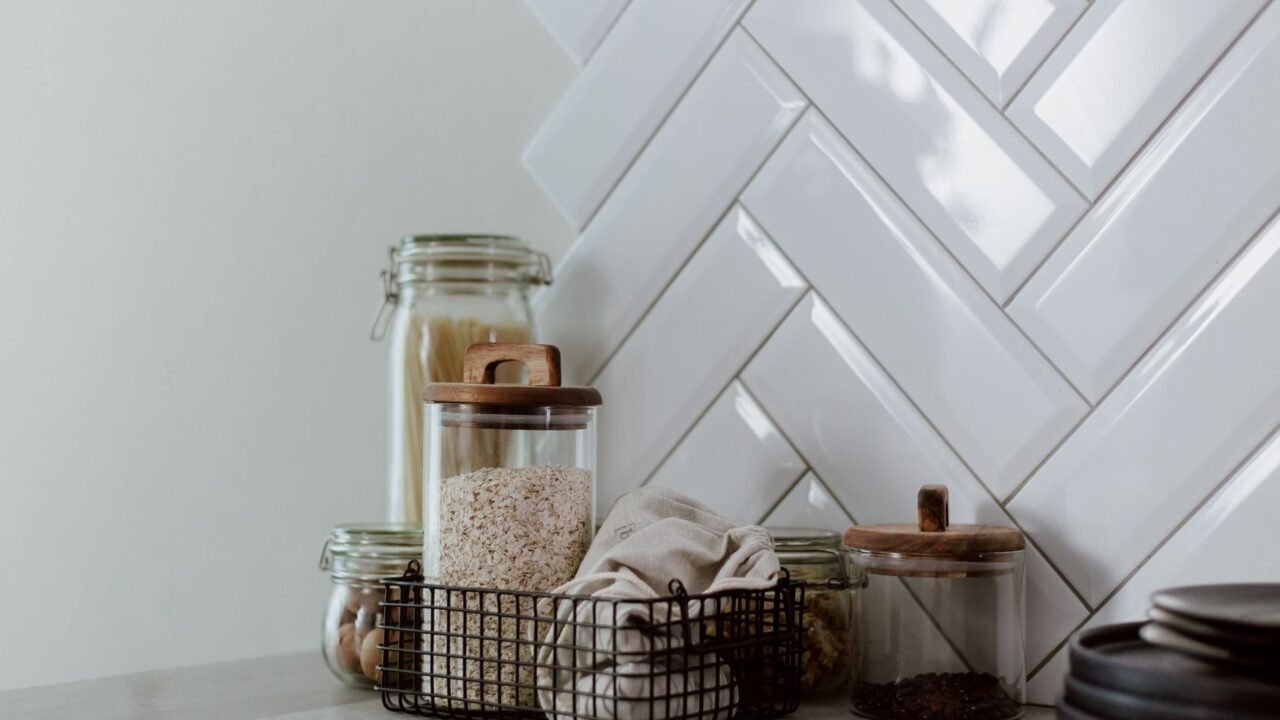
For pantry or under-sink storage, stackable containers in a clear material make contents visible at a glance and stack more efficiently than mismatched packaging. Look for a consistent size system from a single product line so containers stack predictably.
Rolling Carts
A slim rolling cart is one of the more flexible small-kitchen purchases, since it can serve as extra counter space, a spice rack, or pantry overflow depending on the day. Check the wheel locks and overall footprint before buying, since even a few extra inches matter in a tight kitchen.
Questions Worth Asking Before You Buy
- Does this solve a specific, repeated frustration, or does it just look organized in a photo?
- Will it fit the exact dimensions of the space, measured rather than estimated?
- Is it easy to clean, given that kitchen storage collects crumbs and spills?
- Does it need installation, and if so, is that realistic for a renter or a weekend project for an owner?
- How Much Does a Kitchen Refresh Cost? A Realistic Budget Breakdown
Measuring Your Space Correctly Before Buying
The single most common reason a storage purchase disappoints is measuring casually or estimating rather than measuring precisely. Cabinet interior width should be measured at multiple points, front, middle, and back, since many cabinets taper slightly or have obstructions like hinges that reduce usable width toward the front. Drawer depth should account for any raised lip or track hardware inside the drawer, which can reduce the effective usable depth by an inch or more compared to the drawer’s outer dimensions. For under-cabinet or wall-mounted options, measuring the clearance to the nearest obstruction, an outlet, a window trim, a light switch, prevents purchasing something that looks correct on paper but cannot actually be installed as planned.
Materials Comparison: Wire vs. Wood vs. Plastic

Wire organizers, common in pull-out cabinet systems and closet shelving, allow better airflow and visibility and tend to be less expensive than solid alternatives, but they can allow smaller items to slip through gaps and are generally less forgiving of spills, which can drip through rather than being contained. Wood organizers offer a more finished look and better spill containment but typically cost more and require more careful cleaning to avoid water damage over time. Plastic and acrylic options split the difference reasonably well, offering spill containment similar to wood at a cost closer to wire, though lower-quality plastic can become brittle or discolored with age and sun exposure near a window.
Considering Return Policies and Trial Periods
Because a storage product’s real-world fit is hard to judge fully from photos and listed dimensions alone, checking a retailer’s return policy before purchasing, particularly for larger or more expensive organizational systems, provides a safety net if a product does not perform as expected once installed. Starting with a single unit of any new organizational product, rather than ordering enough to outfit an entire kitchen at once, limits the cost of finding out a specific product does not suit the space as well as hoped.
Prioritizing Purchases When Budget Is Limited
When a full storage overhaul is not realistic all at once, addressing drawer organization first tends to deliver the most day-to-day relief for the lowest cost, since drawers are typically where the most frequently reached-for items live. Vertical wall-mounted storage is a reasonable second priority, since it adds capacity without consuming any existing floor or counter space. Pull-out and sliding cabinet solutions, while often the most transformative for a genuinely difficult layout, also tend to be the most expensive category and are worth saving for last or for a specific problem area that lower-cost options have not resolved.
Combining Products From Different Categories

A well-organized small kitchen rarely relies on a single product category alone. Pairing a rolling cart for flexible overflow storage with a set of drawer dividers and one or two wall-mounted racks typically addresses more of a kitchen’s actual pain points than investing heavily in just one category, since different storage challenges, loose utensils, bulky pots, overflow pantry items, each respond better to a different type of solution.
Measuring Before You Buy Any Storage Product
The most common mistake in small-kitchen storage shopping is buying based on how a product looks in photos rather than how it will actually fit the specific dimensions of the space it needs to occupy. A pull-out cabinet organizer that looks compact online can turn out to be too deep for a particular cabinet once the door swing and hinge clearance are accounted for, resulting in a product that has to be returned after the fact. Before shopping for any storage solution, it helps to measure not just the width of a space but the full depth, height, and any obstructions like pipes under a sink or a support beam inside a pantry, and to write those numbers down rather than relying on memory while browsing in a store or online. This single habit prevents the majority of storage-related returns and wasted purchases.
It is also worth thinking about weight capacity and material durability rather than choosing purely on price. A wire shelf rated for light use will sag or bend under the weight of heavy cookware over time, while a slightly more expensive solid-shelf or reinforced option holds up for years without needing replacement. Reading the specific weight rating listed by a manufacturer, rather than assuming all products in a category perform similarly, helps match the product to its actual intended use, whether that is holding a few lightweight spice jars or a stack of heavy ceramic dishes. Spending a little more on a durable option for high-use areas is generally a better long-term value than replacing a cheaper product every year or two.
Comparing Product Categories Rather Than Individual Brands
A useful way to shop for kitchen storage without getting overwhelmed by the sheer number of similar-looking products is to compare categories of solutions rather than trying to evaluate every individual product on the market. Pull-out organizers, stackable risers, over-the-door racks, and modular bin systems each solve a different underlying storage problem, and understanding which category actually addresses the specific frustration in a given kitchen matters more than finding the single best-reviewed product within a category that was not the right fit to begin with. Reading a handful of reviews specifically looking for mentions of durability over time, rather than just initial impressions, tends to reveal more useful information than star ratings alone, since a product can look great in early reviews and still fail to hold up after several months of regular use.
Return policies are also worth checking before purchase, particularly for storage products bought online without the ability to physically verify dimensions and build quality first. A generous return window removes much of the risk from experimenting with a new storage category, since even careful measuring occasionally misses a detail like door clearance or an internal cabinet ridge that only becomes apparent once the product arrives and is test-fitted in place. Keeping original packaging until a product has been used successfully for a couple of weeks is a simple habit that preserves the option to return an item that turns out not to fit as expected.
Related Reading
- How to Organize a Small Kitchen That Never Feels Cluttered
- Signs It’s Time to Replace a Major Kitchen Appliance
- Simple Kitchen Upgrades That Don’t Require a Renovation
- How to Keep a Kitchen Pantry Organized Long-Term
Frequently Asked Questions
Should storage purchases be made all at once or gradually? Gradual purchasing, addressing the single most frustrating storage gap first and expanding from there, tends to produce better-fitted results than an all-at-once purchase based on assumptions about what the whole kitchen needs before living with any of it.
How do I know if a product is genuinely designed for kitchen use versus general storage? Kitchen-specific products are generally described with moisture resistance, food-safe material certifications, or explicit kitchen use cases in their listing; a general storage product without this language may not hold up as well to a kitchen’s specific conditions, humidity, grease, temperature swings near appliances.
Is it worth paying more for a well-known storage brand? Build quality and warranty support vary meaningfully between manufacturers, and for products that will see daily use and bear real weight, drawer slides, pull-out shelving, paying somewhat more for a reputable brand with a real warranty is often justified compared to the cheapest available option.
Buy for the Kitchen You Have
The most effective storage purchases solve a specific problem in your actual kitchen rather than replicating a system designed for a different layout. Measuring first, buying one category of solution at a time, and living with it before adding more tends to produce a kitchen that stays organized rather than one that just looks organized on move-in day. Pair these picks with a layout strategy like our guide to organizing a small kitchen that never feels cluttered for the best results.










1 Comment