
A small kitchen has less room for error than a larger one. Every cabinet, drawer, and stretch of counter needs to earn its place, but with the right layout choices, a compact kitchen can stay genuinely organized rather than just temporarily tidy.
Use Vertical Space Aggressively
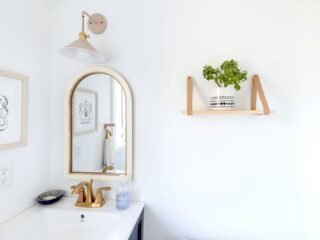
Small kitchens rarely lack storage entirely, they lack storage at the right height. Adding a shelf above existing upper cabinets, mounting a rail with hooks for utensils, or installing a slim shelf above a doorway all put unused vertical space to work.
Choose Stackable and Nesting Cookware
Bulky pots and pans that do not nest together waste cabinet space quickly. Investing in cookware designed to stack or nest, or adding simple pan organizers to existing cookware, can meaningfully increase how much fits in the same cabinet footprint. If you’re shopping for organizers to support this kind of system, our buying guide to storage solutions for small kitchens covers what to look for in drawer dividers, pull-outs, and rolling carts.
Install Drawer Organizers Everywhere Possible
Utensil drawers, junk drawers, and even cabinet drawers all benefit from dividers that keep items from sliding into a jumbled pile. A well-divided drawer holds more, and stays organized longer, than the same drawer left open and unstructured.
Rethink the Inside of Cabinet Doors
Small adhesive racks or hooks on the inside of cabinet doors can hold spice jars, measuring cups, or cutting boards without taking up any shelf space at all. This is one of the most overlooked storage opportunities in a small kitchen.
Keep Countertop Appliances to a Genuine Minimum

Every appliance left out permanently reduces usable counter space, which matters even more in a small kitchen. Keeping out only what gets used daily, and storing everything else, even if that means a bit more effort to retrieve it occasionally, keeps the workspace functional.
Use a Rolling Cart for Flexible Storage
A slim rolling cart can serve as extra counter space, pantry overflow, or a bar cart depending on the day, and it can be tucked away or moved as needed in a kitchen where every square foot matters.
Edit the Kitchen Seasonally
A small kitchen fills up gradually with gadgets and dishes that seemed useful at the time but rarely get used. A biannual review of cabinets, removing anything unused in the past year, keeps the available space matched to what actually gets cooked with.
Solutions for Difficult Corner Cabinets
Corner cabinets are consistently the most underused storage in a small kitchen, since their awkward, hard-to-reach shape discourages actually using the far back portion. A lazy Susan, either a full circular turntable or a kidney-shaped version designed for corners, brings items stored at the back within easy reach with a simple spin rather than requiring a full reach-and-search. For base cabinet corners specifically, a pull-out corner unit that swings or slides out when the door opens accesses nearly the entire space, compared to a fixed shelf where the back third is essentially unusable.
Where a corner cabinet has no retrofit options installed and replacing the cabinet itself is not in the budget, simply reserving that back corner for the least frequently used items, holiday serving dishes, appliances used only occasionally, turns an inconvenient spot into a reasonable home for things that do not need frequent access anyway.
Common Small Kitchen Organization Mistakes

Buying storage products before assessing what actually needs to be stored is one of the most common mistakes, often resulting in matching organizers that do not quite fit the available cabinets or drawers. Measuring cabinet interiors and drawer depths before purchasing any organizing product avoids this costly trial and error.
Another frequent issue is keeping duplicate tools and gadgets that a small kitchen simply does not have room for. A second set of measuring cups received as a gift, three similar spatulas, two can openers, all quietly consume space that could otherwise hold something genuinely useful. A periodic review specifically looking for duplicates, rather than only for unused items, catches this category of clutter that a general declutter might miss.
Renter-Friendly Small Kitchen Solutions
Renters facing a small, unmodifiable kitchen have more options than it might initially seem. Adhesive hooks and small adhesive shelves add storage without any drilling, and freestanding kitchen carts or islands add both counter and storage space without altering the existing cabinetry at all. Tension rods installed inside a cabinet create an impromptu second shelf for lightweight items like cutting boards or baking sheets stored vertically, all without any permanent modification.
For renters specifically, prioritizing portable, multi-purpose storage over anything requiring installation ensures the investment in organization moves along at the next relocation rather than staying behind.
Maximizing Vertical Wall Space Beyond Cabinets
Beyond the shelf-above-cabinets tip mentioned earlier, a pegboard mounted on an open wall section provides infinitely reconfigurable storage for pots, utensils, and even small potted herbs, and it can be painted to blend with the kitchen’s existing color scheme rather than looking like garage storage. A magnetic strip mounted near a prep area holds knives without using any drawer or block space at all, freeing that space for other tools.
Storing Small Appliances Efficiently
Small appliances used only occasionally, a slow cooker, a waffle iron, a stand mixer, are frequently the single largest consumers of cabinet space in a compact kitchen. An appliance garage, a dedicated cabinet or corner reserved specifically for these items rather than mixing them with cookware, keeps them grouped and easier to locate than scattering them across whatever cabinet had space at purchase time. For appliances truly used only a few times a year, storing them somewhere outside the kitchen entirely, a nearby closet or a garage shelf, frees meaningful kitchen space for daily-use items.
A Simple Kitchen Audit Process

Every six months or so, a brief audit, pulling everything out of one cabinet or drawer at a time and honestly assessing whether each item has been used since the last audit, catches the gradual creep of unused items that accumulate in any kitchen over time. This does not need to be a full decluttering session; simply identifying two or three items per cabinet that can be donated or discarded, repeated across the whole kitchen, meaningfully maintains the available space over the course of a year.
Using Vertical Space Before Buying More Storage
Most small kitchens are not actually short on storage volume, they are short on storage that uses the vertical space above counters and inside cabinets efficiently. Before buying a single new organizer, it is worth auditing how much of the vertical space inside existing cabinets is sitting empty above a single shelf of stacked plates or pots. Stackable shelf risers, tension rods used to separate baking sheets and cutting boards vertically, and adjustable shelving inserted mid-cabinet can often double the usable storage in a space that already exists, without adding a single new piece of furniture to a room that has no floor space to spare. The wall above counters is frequently underused too; a slim rail with S-hooks for frequently used utensils frees up an entire drawer that can then be repurposed for something else.
Door space is another area that gets overlooked. The inside of a pantry door or a cabinet door under the sink can hold a shallow rack for spices, cleaning supplies, or lids that otherwise create a chaotic stack somewhere else. The key with any door-mounted storage is weight: overloading a door rack can strain the hinges over time, so it works best for lightweight items rather than heavy canned goods or glass jars. Combined, these small vertical additions typically free up enough space that the counter decluttering advice earlier in this guide becomes far easier to maintain, since there is finally somewhere logical for everything to go.
Rethinking What Actually Needs a Home in the Kitchen
A significant portion of small kitchen clutter comes from items that do not actually need to live in the kitchen at all, appliances used only a couple of times a year, serving pieces reserved for occasional entertaining, or duplicate tools accumulated over time that all serve the same basic function. Before adding any new storage solution, it is worth taking inventory of every item currently stored in kitchen cabinets and asking honestly how often each one gets used. Items used less than a few times a year are strong candidates for relocation to a garage shelf, a hall closet, or another storage area entirely, freeing up prime kitchen real estate for items used on a daily or weekly basis instead.
Duplicate tools deserve particular scrutiny in a small kitchen, since it is common for a household to accumulate three or four spatulas, multiple sets of measuring cups, or several types of the same basic knife over the years through gifts and impulse purchases. Keeping only the best-performing version of each tool category, and donating or discarding the rest, often frees up more drawer space than any organizational product could add. This kind of honest inventory review, done once and then repeated briefly every year or so, tends to have a bigger long-term impact on how manageable a small kitchen feels than continuously buying new storage solutions to accommodate an ever-growing collection of rarely used items.
Related Reading
- Signs It’s Time to Replace a Major Kitchen Appliance
- Simple Kitchen Upgrades That Don’t Require a Renovation
- How to Keep a Kitchen Pantry Organized Long-Term
- Best Storage Solutions for Small Kitchens: A Buying Guide
- Induction Cooktops Are Going Mainstream: What Switching Actually Requires
Frequently Asked Questions
What is the single best first purchase for organizing a small kitchen? Adjustable drawer dividers for the most frequently used drawer, generally the one holding everyday utensils, tend to deliver a noticeable improvement in daily function for a very modest cost.
How often should a small kitchen be reassessed for organization? A quick review every three to six months, checking for duplicate items and confirming zone assignments still match current cooking habits, keeps a small kitchen from slowly drifting back into clutter.
Is it worth investing in a kitchen island for a small space? A slim rolling cart or a small drop-leaf island can add meaningful counter and storage space in a small kitchen as long as there is enough clearance to move around it comfortably; measuring the available floor space before purchasing prevents the cart itself from becoming an obstacle.
Small Kitchen, Genuine Function
A small kitchen that stays organized is usually the result of storage choices made deliberately, not a larger kitchen in disguise. Vertical storage, the right cookware, and a willingness to edit regularly do more for a compact kitchen’s function than any single large purchase.