

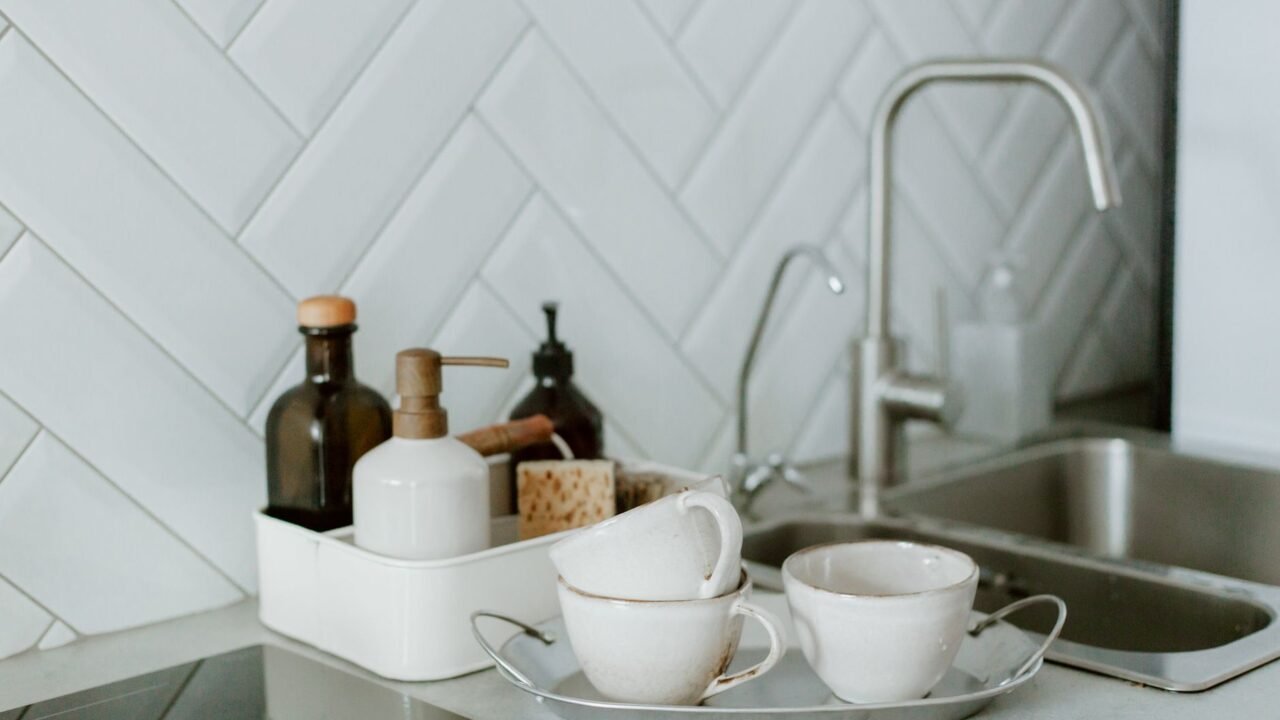
Some kitchens stay cluttered no matter how often they get cleaned, while others manage to stay tidy with much less effort. The difference usually has less to do with cleaning frequency and more to do with whether the kitchen has systems that match how it is actually used.
Clutter Is Often a Sign of a Missing Home
Nearly everything that piles up on a kitchen counter, mail, keys, chargers, random tools, does not actually belong in the kitchen at all. If an item does not have a designated spot somewhere else in the house, the kitchen counter becomes its default location by process of elimination.
Give Counters a Single Job
Counters work best when they are reserved primarily for food preparation rather than general storage. Appliances used daily, like a coffee maker or toaster, can stay out, but anything used only occasionally is better stored in a cabinet, even if that means a few extra seconds to retrieve it.
Create a Landing Zone Near the Entry
If mail, keys, and bags consistently end up on the kitchen counter, the underlying problem is usually that there is no better option nearby. A small tray, hook, or basket near the door people actually use solves this at the source rather than requiring constant re-clearing of the counter.
Match Storage to Frequency of Use
Items used daily belong at eye level or within easy reach. Items used weekly can go in lower cabinets or drawers. Items used only a few times a year, like special-occasion serving dishes, belong in the least convenient spots, such as a high shelf or a separate storage area entirely. For pantry-specific systems, see our guide on keeping a kitchen pantry organized long-term.
Deal With the Junk Drawer Honestly

Every kitchen seems to develop one drawer that becomes a catch-all for loose batteries, rubber bands, and stray tools. Rather than fighting this, giving that drawer a small organizer tray at least contains the chaos to one spot instead of letting it spread across counters and other drawers.
Build a Ten-Minute Reset Into the Evening
A short reset before bed, clearing dishes, wiping counters, and putting stray items back where they belong, prevents small messes from compounding into a kitchen that needs a deep clean every weekend. This is far less about effort and more about consistency.
Revisit Storage When Habits Change
A storage system that worked for a household of two may not hold up once there are more people, more appliances, or new routines. Kitchens that start feeling cluttered again after a period of staying tidy often just need their storage adjusted to match how the space is actually being used now, not a complete overhaul.
Zone by Activity, Not Just by Item Type
Beyond general storage-by-frequency principles, a kitchen that stays organized often has specific activity zones built around how cooking actually happens. A coffee and breakfast zone near the counter closest to the water source keeps mugs, coffee, filters, and cereal within a single reach, rather than scattered across three different cabinets. A baking zone groups flour, sugar, mixing bowls, and measuring tools together, ideally near whichever counter section gets used for that purpose, so a baking project does not require walking the full length of the kitchen to gather ingredients.
A prep zone near the primary cutting board benefits from having cutting boards, knives, and commonly used spices within arm’s reach, while a zone near the stove holds pots, pans, oils, and cooking utensils. Thinking in terms of these functional zones, rather than simply grouping by object category, tends to produce a kitchen that feels intuitive to cook in rather than merely tidy to look at.
Common Mistakes That Undo a Kitchen Organizing Effort
The most common mistake is organizing a kitchen once, thoroughly, and then never revisiting the system as habits change. A system built around a two-person household eating out often will not hold up once a third person moves in or the household starts cooking more meals at home, and blaming the resulting clutter on a lack of willpower rather than an outdated system is a common but unhelpful conclusion.
A second common mistake is storing rarely used items in the most convenient locations simply because that is where space happened to be available when they were purchased. A stand mixer used twice a year sitting on the counter, while daily-use items are buried in a lower cabinet, inverts the frequency-of-use principle and creates ongoing friction that a one-time reorganization will not fix on its own.
Renters vs. Owners: What Can Actually Be Changed

Renters often assume they cannot meaningfully reorganize a kitchen without permanent changes, but most of the zone-based and frequency-based principles described here require no modification to the space at all, only a rethinking of what goes where. Adhesive-backed hooks, tension-mounted shelves inside cabinets, and freestanding carts all add meaningful organization without any drilling or permanent alteration, making them reasonable options for a rental kitchen.
Homeowners have more flexibility to add permanent solutions, pull-out drawers retrofitted into existing base cabinets, under-cabinet lighting, or built-in dividers, but even for owners, it is often worth testing a zone-based system with inexpensive, movable storage first before investing in permanent fixtures, since actual usage patterns sometimes differ from what seemed logical on paper.
Involving Everyone Who Uses the Kitchen
A kitchen organizing system designed by one household member without input from everyone else who cooks or eats there often breaks down quickly, since the system may not match how other people actually move through the space. A brief conversation about where people instinctively look for a specific item, before finalizing zone placement, can prevent a well-intentioned system from being quietly abandoned by other household members who find it counterintuitive.
A Simple Kitchen Reset Checklist
When a kitchen has slipped back into clutter, a focused reset rather than starting over from scratch is usually enough to restore the earlier system. Clearing counters completely and returning only daily-use items, checking that the junk drawer has not expanded beyond its organizer tray, confirming the entry landing zone is still catching mail and keys rather than the counter, and doing a quick check of whether any zone assignments need to shift based on recent changes in routine, together take under thirty minutes and usually resolve most of the drift that accumulates over a few busy weeks.
Storage Solutions Worth Considering by Zone
Once zones are defined, matching the right storage product to each one makes the system easier to maintain. A coffee zone benefits from a small tray that corrals mugs and packets so they do not spread across the counter. A baking zone works well with a shallow bin for frequently used baking sheets and a lazy Susan for spices, since spinning access beats digging through a stacked pile. A prep zone near the cutting board benefits from a countertop knife block or an in-drawer knife organizer, both of which keep sharp tools contained and easy to locate without the wobble of a loose drawer.
Adjusting for Shared or Multi-Cook Households

Kitchens used by more than one regular cook face an additional organizing challenge: two people often develop different instincts for where things belong. Rather than one person imposing a system unilaterally, walking through the kitchen together and agreeing on just the top three or four zone locations, the ones causing the most friction, tends to produce a system both people actually maintain, compared to a more exhaustive system designed by only one person.
Handling Shared Kitchen Equipment Fairly
In households where multiple people cook regularly, shared equipment like a favorite pan or a specific knife can become a quiet point of friction if it is not returned to its designated spot after use. Labeling a specific storage zone as belonging to a particular tool, rather than leaving equipment wherever it was last set down, reduces this friction and keeps the overall system from degrading each time someone deviates from it under time pressure.
The Psychology of a Cluttered Kitchen
A visually cluttered kitchen can make cooking itself feel more effortful than it actually is, since a crowded counter adds a layer of decision fatigue, where to even begin prepping, before a task has started. Recognizing that some of the resistance to cooking at home stems from this visual and physical friction, rather than from meal planning or motivation alone, reframes kitchen organization as a genuine tool for making home cooking feel more approachable day to day.
Identifying the Real Source of Recurring Clutter
A kitchen that always feels cluttered no matter how often it gets tidied usually has a specific recurring source rather than a general lack of effort, and finding that source matters more than any single organizing session. Common culprits include a landing zone near the door where mail, keys, and bags pile up because there is no designated spot for them, a junk drawer that has expanded to swallow items that belong elsewhere, or countertop appliances kept out permanently simply because there is nowhere else convenient to store them. Spending a week simply noticing where clutter tends to accumulate, rather than immediately trying to fix it, reveals patterns that a one-time deep clean will not address, since the same spots tend to refill within days if the underlying cause is not identified and solved directly.
Once a pattern is identified, the fix is usually smaller and more targeted than a full kitchen reorganization. A small tray or basket at the specific spot where mail piles up, moved close enough to the entry point that using it takes no extra effort, solves that particular clutter source far more effectively than a general tidying habit. The goal is matching the solution to the specific behavior causing the clutter, since a storage solution that requires walking across the kitchen to use correctly will get bypassed in favor of the nearest flat surface, no matter how well-organized that storage solution looks on paper.
Related Reading
- Easy Storage Ideas for Homes With Limited Closet Space
- A Realistic Weekly Cleaning Routine for Busy Households
- How to Declutter a Room Without Feeling Overwhelmed
- Underconsumption Core: The Viral Trend Making Homes Feel Calmer Without New Purchases
- Zone Cleaning: The Viral Method That Replaces One Big Cleaning Day
Frequently Asked Questions
How often should a kitchen organizing system be reassessed? Roughly every six months, or immediately after any significant change in household size or routine, is a reasonable rhythm for checking whether zone assignments still make sense.
What is the single highest-impact change for a chronically cluttered kitchen? Creating a landing zone outside the kitchen for mail, keys, and bags typically has the largest single effect, since so much of what accumulates on a kitchen counter does not actually belong in the kitchen at all.
Should appliances be stored by size or by frequency of use? Frequency of use should take priority over size when deciding what stays accessible, even if that means a large but frequently used appliance stays on the counter while a smaller, rarely used one goes into deep storage.
Systems Beat Willpower
Relying on remembering to put things away rarely works long-term. A kitchen that stays organized almost always has a system, a landing zone, matched storage, a contained junk drawer, that makes the tidy choice the easy choice by default.









2 Comments