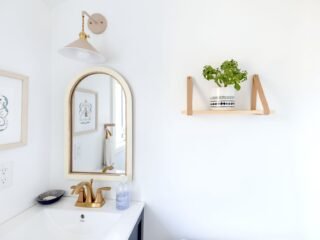


Biophilic design has become shorthand for filling a room with plants, but the idea behind it is broader and more useful than a jungle of pots. The term describes designing spaces that connect people with natural elements: daylight, fresh air, organic materials, views of greenery, water, and the irregular patterns found in nature. Research on how these elements affect mood and comfort is still developing and sometimes overstated, yet the core principles line up with what most people already sense about rooms that feel calm versus rooms that feel stale.
Applied well, it does not require a renovation or a large budget. It mostly comes down to paying attention to light, materials, and layout, and treating plants as one tool among several rather than the whole strategy.
What Biophilic Design Actually Covers
Designers usually group biophilic elements into three broad categories. The first is direct contact with nature, such as living plants, natural light, airflow, and water. The second is indirect reference, meaning natural materials, colors, textures, and images or forms that echo nature. The third concerns the qualities of the space itself, such as having a sheltered spot to sit with a view out, a sense of open prospect, or a layout that rewards a bit of exploration. A room that scores well on all three tends to feel restful even with only one or two plants in it, while a room crowded with plants but lit by a single overhead fixture often still feels flat.
Daylight Is the Biggest Lever

Natural light does more for a room than almost any decor change. Heavy curtains, dark window treatments, and furniture parked in front of windows quietly undo it. Switching to lighter sheer panels or top-down bottom-up shades, mounting curtain rods 6 to 12 inches wider than the window frame so fabric stacks off the glass, and keeping sills clear can noticeably brighten a space. Mirrors placed on walls adjacent to windows, rather than directly opposite where they can cause glare, spread light deeper into the room. Where daylight is limited, warm white bulbs around 2700 to 3000 Kelvin in the evening and brighter, cooler light around 4000 Kelvin in work areas during the day better mimic how natural light shifts.
Plants Done Thoughtfully
Plants remain a strong part of biophilic design, but quantity is less important than health and placement. A few large, thriving plants usually make more impact than a dozen small struggling ones on a windowsill. Floor plants such as a rubber tree, bird of paradise, or large dracaena add height and soften corners, while trailing plants on high shelves draw the eye upward. Matching species to the actual light available matters more than matching them to a mood board. Claims that a few houseplants significantly purify indoor air are generally exaggerated, since real-world air quality depends far more on ventilation, so it makes sense to choose plants for how they look and feel rather than as an air filter.
Natural Materials and Texture

Wood, stone, wool, linen, cotton, jute, rattan, clay, and leather all bring visual and tactile variation that synthetic finishes rarely match. The goal is not to make everything rustic but to introduce honest materials where hands and eyes land most often: a solid wood table, a wool throw, linen curtains, a stone or ceramic lamp base, a jute or wool rug. Visible grain, slight irregularity, and materials that age gracefully contribute to the effect. A common misstep is relying on printed imitations, such as plastic wood-look surfaces with obviously repeating patterns, which tend to read as artificial up close.
Color Palettes Drawn From the Landscape
Biophilic color schemes usually borrow from forests, deserts, coastlines, or meadows: muted greens, warm earth tones, sandy neutrals, soft blues, and terracotta. These hues tend to be slightly grayed or complex rather than bright and saturated. A practical approach is to keep large surfaces like walls and sofas in calmer neutrals or soft greens, then add richer natural accents through textiles, pottery, and artwork. Limewash and mineral paints, with their subtle variation, also fit the look well. Avoid going entirely green, which can feel heavy and themed, and remember that a color looks different in north light than it does in warm south light, so testing large swatches on the wall for a few days is worth it.
Shape, Pattern, and Organic Forms
Nature rarely produces perfect straight lines, and spaces filled only with sharp right angles can feel rigid. Introducing curves through a round dining table, an arched mirror, a rounded sofa arm, or an oval rug softens a room. Patterns that echo natural forms, such as leaf motifs, wood grain, ripple textures, or botanical prints, add interest without needing literal greenery. Restraint helps here. One or two strong organic shapes in a room have more effect than every item being curved, and a few botanical prints feel deliberate while a full themed collection can tip into novelty.
Views, Air, and Sound
Arranging seating so people can look outside, even at a single tree or a patch of sky, is one of the easiest biophilic changes and costs nothing. A reading chair angled toward a window, or a desk placed perpendicular to glass to avoid screen glare while still offering a view, uses what is already there. Opening windows for cross ventilation when weather allows, and choosing quiet fans over sealed, stuffy rooms, adds the sense of moving air. Some people also find gentle natural sounds, such as a small tabletop fountain or simply open windows on a quiet street, help, though fountains need regular cleaning to avoid mineral buildup and stale water.
Common Mistakes and Where It Goes Wrong
The most common failure is treating the idea as a shopping list of plants and rattan, which can make a room cluttered rather than calm. Fake plants are another sticking point. High quality artificial greenery has improved and can work in spots with no light at all, but dusty, obviously plastic plants undermine the whole idea. Moss walls and living green walls look striking in photos yet can be expensive, need careful irrigation or preservation, and are hard to maintain in typical homes. Finally, plant care can become a chore if the collection grows faster than the routine to support it, so building up gradually makes sense.
Starting Small on a Realistic Budget
A reasonable first step costs very little: clear the windows, rearrange seating toward a view, and swap a harsh overhead bulb for warmer lamps. From there, one or two healthy floor plants at 30 to 80 dollars each, a natural fiber rug, and linen or cotton curtains can shift the feel of a living room substantially. Larger changes, such as wood flooring, skylights, or a garden room addition, belong in longer term planning. Treating biophilic design as a lens for every future purchase, asking whether a new item brings in light, texture, or a connection to the outdoors, is often more effective than one big makeover.
Frequently Asked Questions
Is biophilic design just about adding houseplants?
No. Plants are one element, but daylight, natural materials, organic shapes, views outside, airflow, and earthy color palettes are equally important to the approach.
Do houseplants really clean indoor air?
Not in a meaningful way at typical household quantities. Ventilation and filtration have a much larger effect on indoor air quality than a few plants.
Can this approach work in a small apartment?
Yes. Maximizing daylight, using natural fabrics, adding one or two well-chosen plants, and positioning seating toward a window all work in compact spaces.
Are artificial plants acceptable in a biophilic room?
High quality artificial plants can fill spots with no usable light, but they should be kept clean and used sparingly alongside genuine natural elements.