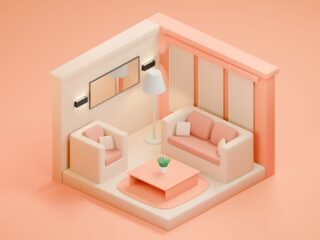


Walk into enough living rooms and a pattern shows up quickly: a rug floating in the middle of the floor, a few feet from every piece of furniture, looking more like a bath mat than an anchor for the room. Undersized rugs are one of the most common decorating mistakes, and they happen for understandable reasons. Large rugs are expensive, the smaller size looks big enough rolled up in the store, and nobody wants to cover a nice wood floor. This rug sizing guide covers the measurements that actually make a room feel pulled together, along with the tradeoffs when budget or layout gets in the way.
The basic principle is simple. A rug should connect the furniture in a seating area rather than sit in the gap between pieces. Once that idea is clear, choosing a size becomes a matter of measuring the furniture group, not the room.
Why Small Rugs Make Rooms Look Smaller
A rug that does not reach any furniture creates a visual island. The eye reads the rug, then a band of bare floor, then the sofa and chairs, and the seating area ends up feeling scattered. This effect is strongest in small rooms, which is ironic, since small rooms are where people most often choose small rugs to avoid overwhelming the space.
A larger rug that sits under the front legs of the furniture does the opposite. It defines a single zone, makes the furniture look like a deliberate group, and visually expands the area because the floor reads as one continuous surface. In most living rooms, going one size larger than first planned improves the result.
The Three Standard Placements

Designers usually describe three options. All legs on, where every piece of furniture sits fully on the rug, gives the most cohesive and luxurious look and suits large or open rooms. Front legs on, where the front legs of the sofa and chairs rest on the rug and the back legs sit on the floor, is the most common and practical choice for typical living rooms. Floating, where no furniture touches the rug, only works in very specific cases, such as a small rug in front of a fireplace or under a coffee table in a reading corner.
For most living rooms, front legs on is the safe default, and it is the placement this rug sizing guide assumes unless noted otherwise. It requires a rug large enough to extend at least 6 to 8 inches under the front of the sofa and each chair, which immediately rules out the 5 by 7 rugs that end up in so many homes.
Common Sizes and What They Actually Fit
A 5 by 8 rug works under a coffee table in a small apartment, in a reading nook, or in front of a loveseat in a very compact room. It rarely works for a full living room seating group. An 8 by 10 rug is the most practical size for an average living room with a standard 84 inch sofa and two chairs, allowing front legs on for all pieces. A 9 by 12 rug suits larger rooms, sectionals, and layouts where all legs on is the goal.
A 10 by 14 or larger rug is meant for open plan rooms or very large seating groups. Runners in 2.5 by 8 or 3 by 10 sizes belong in halls and kitchens. Round rugs in 6 to 8 foot diameters work under round dining tables or in rooms with curved furniture, but they rarely suit rectangular living room layouts.
How to Measure for the Right Size

Measure the seating group, not the room. Push the furniture into its final arrangement, then measure the width from the outside of one chair arm to the outside of the opposite chair, and the depth from the front edge of the sofa to the front edge of chairs facing it. Add about 6 to 12 inches to each edge for front legs on, and more if the goal is all legs on.
Next, check the room perimeter. A good rule is to leave about 12 to 18 inches of bare floor between the edge of the rug and the walls in a closed room, and roughly 8 inches minimum in very small rooms. Painter tape on the floor outlining the planned rug size helps a great deal, since rug dimensions are hard to picture until they are physically marked out.
Rug Sizing for Dining Rooms and Bedrooms
Dining rugs follow a different rule: chairs should stay on the rug when pulled out. That usually means adding about 24 to 30 inches on every side of the table. A 6 seat table around 72 by 40 inches typically needs an 8 by 10 rug, and a larger table may need a 9 by 12. A rug that catches chair legs when people push back is both annoying and a tripping hazard.
In bedrooms, the rug typically goes under the lower two thirds of the bed, leaving the nightstands on the floor, with 18 to 24 inches of rug visible on each side. A queen bed often pairs with an 8 by 10, and a king with a 9 by 12. Two runners on either side of the bed are a cheaper alternative that still gives soft landing for bare feet in the morning.
Open Floor Plans and Multiple Rugs
In open plan spaces, rugs define zones. A living area rug, a dining rug and a runner in the kitchen can create separate areas without walls. These rugs should be sized to their own furniture groups and spaced so that at least 12 to 24 inches of floor separates them. Overlapping rugs or edges that nearly touch tend to look accidental.
Multiple rugs do not need to match, but they should share something, whether a color, a material or a level of pattern. Keeping rug edges roughly parallel with each other and with the main walls also helps the space feel organized.
Budget Tradeoffs and Layering
A larger rug costs more, sometimes double the price of the next size down. Several approaches keep costs manageable. Natural fiber rugs in jute or sisal are relatively affordable in large sizes, and a smaller patterned rug can be layered on top of them for color. Flatweave and machine-made rugs are cheaper per square foot than hand-knotted wool. Buying a large, simple rug and spending less on accessories almost always yields a better room than the reverse.
Layering also helps renters or anyone who already owns a favorite small rug. A neutral 9 by 12 jute base with a 5 by 8 patterned rug on top gives both scale and personality. The base rug should extend at least 12 to 18 inches beyond the top rug on all sides so the layering looks intentional.
Mistakes That Show Up Most Often
Beyond simply buying too small, common mistakes include placing the rug off center relative to the seating, running a rectangular rug perpendicular to a long sofa, and pushing a rug against one wall while leaving a big gap on the opposite side. Skipping a rug pad is another, since pads prevent slipping, reduce wear and add cushion. A pad should be cut about 1 to 2 inches smaller than the rug on every side so it does not show.
Finally, people often ignore door clearance. A thick rug or pad can catch the bottom of a door that swings over it. Check door clearance before committing to a high pile rug near an entry or closet. A quick rug sizing guide to keep in mind: measure the furniture group, add 6 to 12 inches per side, and leave 12 to 18 inches of floor at the walls.
Frequently Asked Questions
What size rug is right for a standard living room?
For most living rooms with a standard sofa and two chairs, an 8 by 10 rug allows front legs on for all pieces. Larger rooms or sectionals usually need a 9 by 12.
Should the sofa sit on the rug?
At minimum, the front legs should sit on the rug, about 6 to 8 inches in. All legs on works well in larger rooms. A sofa fully off the rug tends to make the room feel disconnected.
How much floor should show around a rug?
Typically 12 to 18 inches between the rug and the walls in most rooms, and around 8 inches in very small spaces.
Is it better to buy a larger cheap rug or a smaller expensive one?
For overall room appearance, a larger, simpler rug usually wins. A smaller premium rug can be layered on top later if desired.