

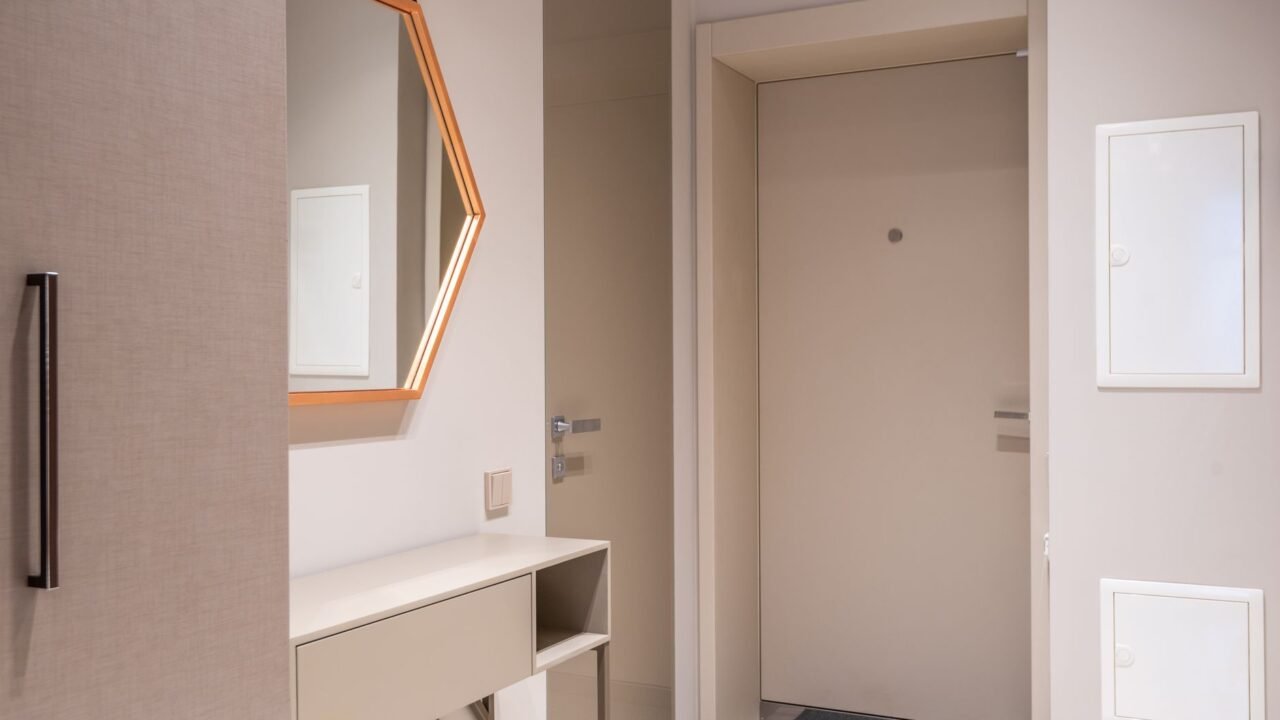
The entryway is the first part of a home most people see, yet it is often the last space to get any real attention. A few smart changes, most of them well under a weekend’s worth of work, can turn a cluttered landing zone into a spot that actually helps a household function better every single day.
Start With What the Entryway Actually Needs to Do
Before buying a single hook or basket, it helps to think through what happens in this space during a typical week. Does everyone drop bags and shoes the moment they walk in? Is mail piling up on a side table? Are keys constantly missing? An entryway that matches these real habits will stay tidy far longer than one that only looks good in a photo.
Walk through the space and note the three or four items that cause the most friction. For most households, that list includes shoes, outerwear, bags, and mail or packages. Everything else is secondary.
Add Storage That Matches How People Actually Enter the House
A bench with storage underneath solves two problems at once: it gives people a place to sit while removing shoes and hides the shoes themselves. If floor space is tight, a slim shelf with baskets mounted at knee height works nearly as well.
Wall hooks placed at two heights, one row for adults and one lower for kids, cut down on the number of jackets that end up on the floor. For homes with limited closet space nearby, it is worth reading our guide on easy storage ideas for homes with limited closet space, since many of the same principles apply to a small entry.
A Landing Zone for Small Items
Keys, sunglasses, and loose mail need a home too. A shallow tray or a small drawer near the door keeps these items from spreading across the nearest flat surface. Giving each family member an informal spot for their own items reduces the daily hunt for missing keys.
Rethink the Floor and Landing Zone
Entryway flooring takes more abuse than almost any other surface in the house. A durable, easy-to-clean mat just inside the door catches dirt and moisture before it spreads further in. A second, smaller rug can define the shoes-off zone if that is a household rule.
If the existing flooring is worn or stained, a runner rug is a low-cost way to refresh the look without touching the subfloor. This is one of the simplest updates on this list, and it makes an outsized difference in how the whole space feels.
Lighting Makes a Small Entryway Feel Bigger

Many entryways rely on a single overhead fixture, which can leave the space feeling dim and uninviting. Adding a wall sconce or a small lamp on a console table softens the light and makes the area feel more like a real room instead of a hallway.
A mirror placed opposite or near a light source bounces light around and gives the entry a sense of depth, which is especially useful in narrow spaces.
Keep Seasonal Items in Rotation
An entryway that works well in summer can feel completely inadequate once winter gear enters the picture. Bulky coats, boots, and umbrellas need more room than warm-weather layers, so it helps to rotate what lives in the entry based on the season. Storing off-season items in a nearby closet or bin frees up hooks and floor space for what is actually in use right now.
A simple rule, such as keeping only the current season’s outerwear in the entry and moving everything else to storage twice a year, keeps the space from slowly filling with items that rarely get touched.
A Few Finishing Touches
Once the functional pieces are in place, a handful of small touches can make the entryway feel intentional rather than purely practical. A piece of art, a plant that tolerates lower light, or a fresh coat of paint on the door itself all go a long way.
If there is empty wall space above a bench, a simple floating shelf is an easy weekend project that adds display space without crowding the floor.
Solutions for Very Small Entryways

Not every home has room for a bench and a full storage wall near the door. In a genuinely tight entry, sometimes just a few feet wide, a slim console table no more than 10 to 12 inches deep can hold a tray and a lamp without blocking foot traffic. A single row of hooks mounted directly above a shoe tray does the work of a bench-and-shelf combination in a fraction of the footprint. Over-the-door organizers, normally associated with closets, work just as well hung on the back of a coat closet door or even the front door itself if there is no closet nearby, holding umbrellas, dog leashes, or gloves without using any floor space at all.
When there truly is not enough width for a bench, a wall-mounted fold-down seat, the kind often used in mudrooms, provides a place to sit for putting on shoes and folds flat against the wall the rest of the time. This is a reasonable middle ground for a hallway-style entry that has to double as a walkway.
Common Entryway Mistakes to Avoid
The most common mistake is sizing storage for an idealized version of the household rather than the real one. A single hook per family member sounds sufficient on paper, but coats, bags, and dog leashes all compete for the same hook, and the result is a floor pile regardless of how many hooks are on the wall. Planning for roughly twice as many hooks or storage points as there are people in the household accounts for this overlap.
Another frequent misstep is choosing a bench or shelf that looks right in a showroom but does not account for how a shoe actually sits underneath it. A bench with only 10 inches of clearance to the floor cannot fit boots, only slides and flats, which defeats the purpose in colder climates. Measuring the tallest pair of shoes or boots that will realistically live there, and adding a couple of inches of clearance, avoids this.
Finally, an entryway that only gets attention when it is being redesigned tends to slide back into clutter within a few weeks. Pairing any physical changes with a simple habit, such as a two-minute reset each evening, is what actually keeps the new system working past the first month.
Comparing Entryway Flooring Options
For households replacing entry flooring rather than just adding a mat, a few materials handle the abuse of an entryway better than others. Porcelain tile resists water and grit well and is easy to wipe down, though it can feel cold underfoot in winter without a rug layered on top. Luxury vinyl plank has become a popular middle-ground choice because it resists moisture nearly as well as tile, is warmer underfoot, and is significantly easier for a confident do-it-yourselfer to install without professional help. Sealed hardwood can work in an entry but generally needs a dedicated mat or rug to protect it from grit and standing water, since repeated moisture exposure is one of the fastest ways to damage a wood floor.
For anyone not ready to replace flooring at all, a commercial-grade entry mat with a rubber backing, sized to cover the first several steps into the home rather than just the doorway itself, captures most of the dirt and moisture that would otherwise spread to whatever flooring is already there.
Building the Entryway in Stages

Trying to solve every entryway problem in a single weekend often leads to buying the wrong pieces just to have something in place. A more reliable approach is to spend the first week simply observing: where do shoes land, where does mail pile up, what gets dropped on the floor because there is nowhere else for it to go. That short observation period usually reveals one or two friction points that matter far more than the others.
From there, a reasonable sequence is to address seating and shoe storage first, since that solves the most visible daily clutter, then add the small-items tray for keys and mail once the floor is under control, and finally layer in lighting and decorative touches once the functional pieces are working as intended. Buying everything at once, before living with the space for even a week or two, tends to result in at least one piece that does not actually match how the household uses the entry.
Budgeting in stages also spreads the cost out. A basic bench and a set of hooks can often be done for well under a hundred dollars using ready-made pieces from a home goods or hardware store, while a fully built-in mudroom-style wall with custom cubbies can run into the thousands if built by a contractor. Most households land somewhere in between, and starting with the inexpensive version first is a reasonable way to confirm the layout works before investing in anything more permanent.
Entryways in Homes With Multiple Entrances
Many homes have a secondary entrance, often through a garage or a side door, that gets more daily use than the formal front entry. When this is the case, it usually makes more sense to apply these storage and landing-zone principles to whichever door people actually use to come and go, rather than the door that looks nicest to guests. The front entry can then be kept simpler and more decorative, since it primarily serves visitors rather than daily traffic.
In homes where both entrances see regular use, duplicating a scaled-down version of the system, a small hook and tray setup at each door, prevents the household from funneling everything through a single pinch point and reduces the odds of a pile forming at whichever door lacks its own landing zone.
Rethinking Storage as a System, Not a Series of Fixes
It is tempting to treat closet organization as a list of individual problems to solve one at a time, a shoe pile here, a tangle of belts there, but the most durable results come from treating the whole closet as one connected system where a change in one zone affects the others. Freeing up floor space by adding hanging shoe storage, for example, often creates room for a small bench or hamper that then pulls loose laundry off the floor entirely, which in turn makes the remaining floor space easier to keep clear day to day. Approaching a closet this way, mapping out zones for categories rather than just buying individual bins as problems appear, tends to produce a layout that stays organized far longer than one built up piecemeal over several separate shopping trips.
Seasonal rotation is another system-level habit worth building in from the start rather than adding later. Setting aside a small amount of space, even a single shelf or a few bins at the back of the closet, specifically for out-of-season clothing keeps the main hanging and shelf space reserved for what actually gets worn during the current months. This single habit prevents the common problem of a closet feeling crowded not because there is too much clothing overall, but because everything owned is crammed into visible reach at once regardless of the season.
Related Reading
- 9 Weekend Home Projects That Make a Noticeable Difference
- How to Choose the Right Lighting for Every Room
- Simple Ways to Update a Dated Home Without a Full Renovation
- The Viral One-Weekend Micro-Renovation Trend: What Is Actually Realistic
Frequently Asked Questions
What if there is no coat closet at all? A slim wall-mounted cabinet or a freestanding armoire near the door can substitute for a closet, holding out-of-season coats behind closed doors while hooks handle what is in daily use.
How much weight can a wall-mounted hook or shelf hold? This depends entirely on whether it is anchored into a stud or relying on a drywall anchor; a stud-mounted hook rated for typical household use generally handles a loaded coat and bag without issue, while anything hung on drywall alone should stay within the anchor’s stated weight rating.
Is it worth hiring help for entryway updates? Most of what is covered here, hooks, a bench, a mat, a mirror, is well within reach for a homeowner comfortable with a drill and a stud finder. Flooring replacement is the one item on this list where professional installation is worth considering if the material requires precise cutting or waterproofing.
Start Small and Build From There
None of these changes require a contractor or a large budget. Picking one or two friction points, adding the right storage, and improving the lighting will usually solve most of the daily frustrations an entryway causes. The rest can be added over time as the space keeps proving how useful it can be.








1 Comment