

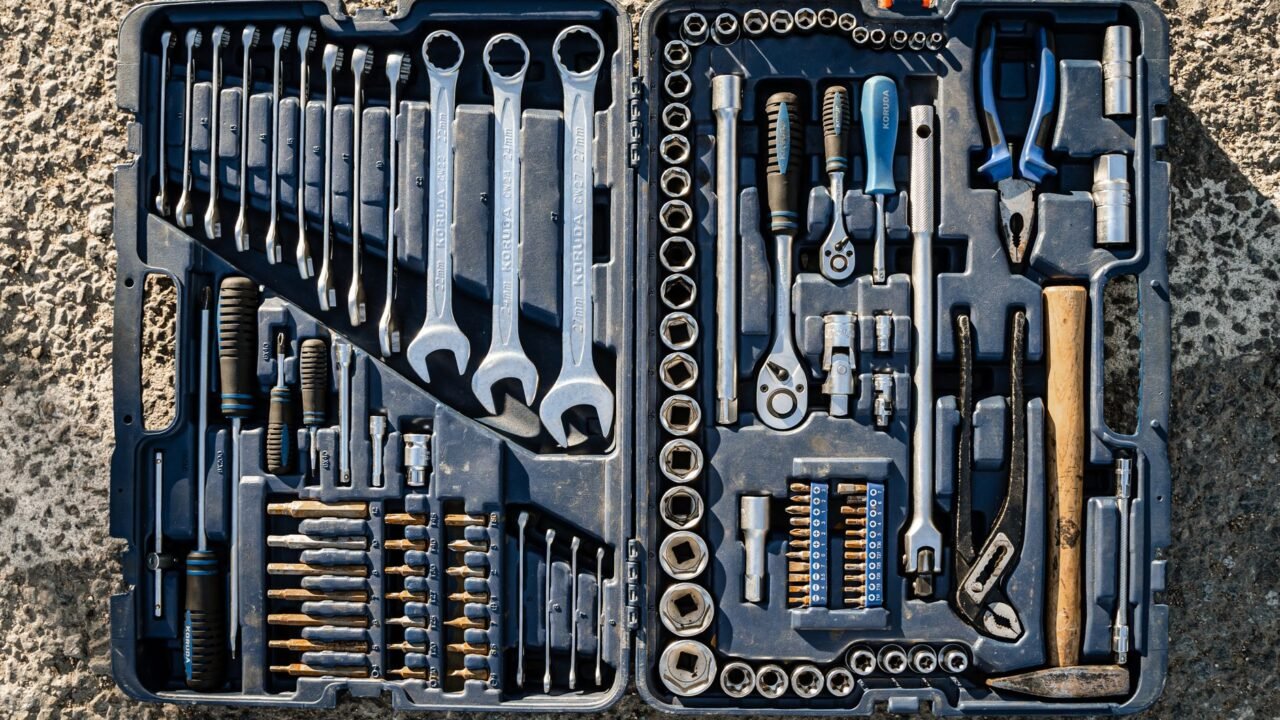
Moving into a first home usually means realizing how many small repairs used to be someone else’s problem. A modest, well-chosen set of tools covers most everyday situations without requiring a fully stocked workshop.
n
Printable Checklist
Want this as a free printable PDF you can check off by hand? Grab the shopping-ready tool kit checklist below and take it straight to the store.
n
A Reliable Screwdriver Set
A set with multiple Phillips and flathead sizes, ideally with a magnetic tip, handles the vast majority of household fastening tasks, from tightening cabinet hinges to assembling furniture.
A Claw Hammer
Beyond hanging pictures, a claw hammer is useful for minor demolition and prying tasks. A mid-weight option is generally easier to control than the heaviest hammer available.
An Adjustable Wrench
A single adjustable wrench covers a range of nut and bolt sizes without needing a full socket set, which makes it a practical first purchase before investing in more specialized tools.
A Tape Measure
Nearly every home project, from hanging curtains to buying furniture, starts with an accurate measurement. A 25-foot tape measure covers most household needs.
A Stud Finder

Anything mounted on a wall, from a shelf to a television, holds far better when anchored into a stud. A basic electronic stud finder removes the guesswork.
A Level
A small level ensures shelves, art, and mounted fixtures actually look intentional rather than slightly crooked, which is easy to miss without checking.
A Utility Knife
Useful for everything from opening boxes to trimming caulk lines, a utility knife with replaceable blades is one of the most frequently reached-for tools in most households.
A Plunger and a Basic Drain Snake
Minor clogs are common enough that having these on hand before an emergency happens saves a late-night store run.
A Cordless Drill
Once the basics are covered, a cordless drill with a few common bits is usually the first power tool worth adding, since it covers both drilling and driving screws for larger projects.
Organizing a Starter Tool Kit

A small dedicated toolbox or a wall-mounted pegboard keeps a starter tool set together and easy to find, which matters more than it might initially seem, since tools scattered across various drawers and closets tend to result in duplicate purchases when the original cannot be located during a small repair. Grouping tools by general purpose, fastening, measuring, cutting, within the box or on the pegboard makes it faster to grab exactly what is needed rather than searching through an undifferentiated pile.
Renting vs. Buying for Occasional Jobs
Specialty tools needed only rarely, a tile saw for a one-time backsplash project, a pressure washer used once a year, a specific ladder height needed for a single gutter cleaning, are frequently more economical to rent from a hardware store or tool rental service than to purchase and store long-term for infrequent use. A reasonable guideline is that a tool used more than a few times a year is generally worth owning, while a tool needed only for a single specific project is usually more sensible to rent.
Safety Basics for a Starter Tool Kit
Basic safety glasses and work gloves are worth adding to a starter kit alongside the tools themselves, particularly once a cordless drill is added, since even simple drilling or driving tasks can produce debris worth protecting eyes from. Reading the specific safety guidance included with any power tool before first use, rather than assuming familiarity from a similar past tool, matters especially for anyone newer to home repairs, since seemingly similar tools can have different safety considerations depending on their specific design.
Maintaining Tools So They Last
Wiping down metal tools after use, particularly if they were used outdoors or in a damp area, prevents the rust that can develop surprisingly quickly on an otherwise quality tool left damp in storage. Keeping a cordless drill’s battery charged rather than letting it sit fully depleted for extended periods also helps preserve battery lifespan, since many rechargeable battery types degrade faster when stored at a very low charge for a long time.
Expanding the Kit as Projects Demand
Rather than trying to anticipate every future tool need upfront, letting actual projects guide what gets added next tends to produce a more genuinely useful collection over time. A homeowner who finds themselves reaching for a pair of pliers repeatedly, without owning a dedicated pair, has a clear signal of what to add next, which is generally a more reliable guide than purchasing based on a generic ‘complete’ tool list.
Storing Tools Where They Will Actually Be Used

A tool kit stored in an inconvenient location, a far corner of a garage or a high closet shelf, is more likely to sit unused even when a task calls for it, simply because retrieving it feels like more effort than the task itself warrants. Keeping a small, frequently used subset, a screwdriver, a tape measure, a utility knife, somewhere central and easily accessible, a kitchen drawer or a hallway closet, while reserving the garage or basement for bulkier or less frequently used items, keeps the everyday tools genuinely convenient to grab.
Building a Tool Collection in the Right Order
New homeowners often feel pressure to buy a complete toolkit all at once, but a more practical approach is building a collection gradually in the order tools actually get used, starting with the items that handle the widest range of common household tasks. A quality adjustable wrench, a set of screwdrivers covering both flathead and Phillips in multiple sizes, a claw hammer, and a tape measure cover the vast majority of minor repairs and furniture assembly tasks that come up in the first months of homeownership. Specialized tools like a stud finder, a level, and a basic drill with a mixed bit set come next, since these unlock the ability to hang shelves, pictures, and curtain rods safely and correctly rather than guessing at wall placement. Buying tools reactively, only once a specific need arises, tends to result in either a rushed, overpriced purchase from a convenience store or a frustrating delay waiting for a delivery.
Quality matters more for tools used frequently and less for tools used rarely, which is a useful filter when deciding where to spend more. A drill or a good set of screwdrivers used weekly benefits from investing in a durable option that will not strip screws or lose its charge quickly, while a specialty tool needed only once or twice a year, such as a tile cutter or a pipe wrench, is a reasonable place to consider a rental or a borrowed tool instead of a purchase. Keeping tools organized in a single dedicated toolbox or drawer from the very beginning, rather than letting them scatter across drawers and closets, also saves considerable time and frustration during the inevitable moment when a specific tool is needed in a hurry.
Filling Gaps Once the Basics Are Covered
Once the essential first tools are in place, a second wave of purchases tends to address more specific situations that come up less frequently but still matter when they do arise. A basic wet-dry shop vacuum handles the occasional larger spill or workshop cleanup that a regular vacuum is not designed for, a set of adjustable pliers and a small hacksaw cover minor plumbing and cutting tasks beyond what the initial basic toolkit addresses, and a headlamp or work light provides hands-free lighting for repairs in dim spaces like under sinks or inside cabinets. These second-tier tools are not needed constantly, but the occasions when they are needed tend to be inconvenient ones, a plumbing leak, an electrical issue in a dark space, and having them on hand already removes one more obstacle during an already stressful moment.
It is also worth setting aside a small, separate space specifically for safety equipment rather than mixing it in with general tools, since items like work gloves, safety glasses, and a basic respirator mask for dusty tasks are used differently and need to be quickly accessible without digging through a toolbox. Keeping this safety equipment in a visible, dedicated spot, rather than buried at the bottom of a toolbox, increases the odds it actually gets used consistently rather than skipped because reaching it felt like more effort than the task seemed to warrant at the time.
Replacing Tools as They Wear Rather Than Waiting for Failure
Tools do not typically announce their decline the way a major appliance does, and a screwdriver with a slightly stripped tip or pliers with a bit of play in the hinge often keep getting used well past the point where they are still working efficiently, quietly making every task slightly harder than it should be. Periodically testing basic hand tools against a simple standard, does a screwdriver still grip a screw head firmly, does a wrench still hold its size without slipping, catches this kind of gradual decline before it becomes a source of ongoing frustration or a safety issue during a repair that calls for real precision.
Related Reading
- 7 Home Maintenance Tasks Worth Doing Before Winter
- A Simple Seasonal Home Maintenance Checklist
- Common Home Repairs Homeowners Can Handle Themselves
- How to Spot Small Home Problems Before They Become Big Ones
- How Much Does a Weekend Home Improvement Project Actually Cost?
Frequently Asked Questions
Is it worth buying a tool set marketed specifically to beginners or new homeowners? Pre-assembled sets can be a reasonable, cost-effective starting point, though checking that the specific tools included match this list’s core recommendations, rather than a set padded with less essential items, helps ensure the purchase is genuinely useful rather than mostly unused.
How much should a starter tool kit cost? A reasonable basic kit covering the items on this list can be assembled at a modest total cost, particularly by buying individual tools as needed rather than a single expensive all-in-one kit that may include tools not immediately necessary.
What is the next tool worth adding after this starter list? A basic socket wrench set is a common next addition once the fundamentals are covered, useful for a wider range of nut and bolt sizes than a single adjustable wrench can handle efficiently.
Buy the Basics First
It is tempting to buy a large tool kit all at once, but a smaller set of genuinely useful tools, added to as specific needs come up, tends to serve a new homeowner better than a large box of tools that mostly sit unused. Once you have these on hand, a surprising number of repairs become manageable yourself; see our list of common home repairs homeowners can handle themselves.